

 |  |
The early days
- 1804, the Congregation of the Sisters of Saint-Charles settles into a first building, no longer standing today, located near our present entrance on Place des Marais in Villefranche-sur-Saône.
- 1833, construction of part of today’s buildings, known as the historic buildings.
- 1901, on 1 July, the Waldeck-Rousseau law on associations is passed, restricting the rights of religious congregations (art. 13 and 16).
- 1902, on 27 June, Prime Minister Émile Combes orders the closure of religious schools operating without authorisation.
The Sisters of Saint-Charles are not expelled, as they run an orphanage. - 1934, the buildings are handed back free of charge to the Congregation of the Sisters of Saint-Charles by Miss Antoinette Pupier of Montagny (Loire), who had purchased them on 12 December 1894 on the congregation’s behalf and with its own funds.
- 1953, the Sisters of Saint-Charles leave and the Sisters of Saint-Aignan arrive.
- 1965, the Sisters of Saint-Aignan leave the Notre-Dame institution.
The Congregation of the Religious of Jesus and Mary, whose founding house at Lyon-Fourvière had been turned into a students’ residence, comes to Villefranche to carry on the educational work of Sainte Claudine Thévenet.
Mother Saint-Pierre-Marie takes over the direction of the girls’ school.
The Notre-Dame institution is then a boarding school for 348 well-mannered young girls (kindergarten, full primary cycle, and secondary education except the final philosophy year).
Originally, Notre-Dame was a girls’ school with boarding facilities, under the trusteeship of the Congrégation des Religieuses de Jésus-Marie founded in 1818 by Claudine Thévenet.
Sister Monique Boizet, Religious of Jesus and Mary
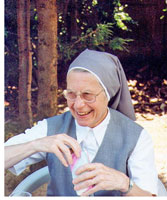
After some fifteen years at the Jesus-Mary Institution in Neufchâteau, in the Vosges, Sister Monique Boizet became its Superior.
She held that post for only a year: in 1975, Sister Monique Boizet, Sister Marie Vincent de Paul in religion, was appointed Superior and Headmistress of the Notre-Dame school in Villefranche-sur-Saône, in the Rhône.
A significant part of our recent history was written under her leadership.
Sister Monique Boizet left our school in 1990 for Remiremont, in the Vosges, where she stayed five years before moving to Romania.
In 2000, Sister Monique Boizet was appointed Superior of the sisters’ retirement home of the Province of France, in Lyon.
She held that post until her death, on 7 March 2004.
Our history…

- 1968, creation of the collège d’enseignement supérieur (CES), the “upper school” of its day, not higher education in today’s sense. (328 pupils)
- 1975, Sister Monique Boizet takes over the direction of the girls’ school. (366 pupils)
- 1978, the Villefranche s/S primary school, most of whose pupils go on to the lower secondary school, is attached to Notre-Dame de Mongré.
In view of this situation, and noting the lack of technical education in the Beaujolais and Val de Saône area, Sister Monique Boizet decides to turn the school into a technical education establishment, to secure its future.
The school becomes co-educational: the Technical High School is born.
To launch this new curriculum, the Tourneux shorthand courses are bought out (Mrs Tourneux, the former owner, joins the teaching staff), along with some forty second-hand typewriters. - 1979, the boarding school closes; the Congregation of the Religious of Jesus and Mary moves off-site. (370 pupils)
- 1980, in the foreground of the red frame, the Dubure factory; top right of the same frame, the Saint-Charles building. (390 pupils)
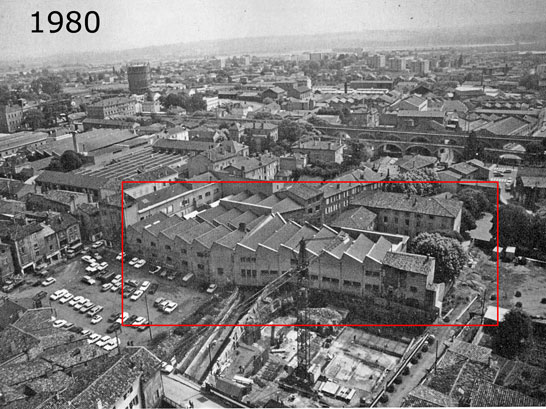
Photo: Villefranche s/S archives
- 1982, the last lower secondary classes close. (425 pupils)
- 1986, 900 m² of the former Dubure factory are acquired. (431 pupils)
- 1988, inside the Dubure factory premises, a gymnasium is created on the ground floor along with five large office-skills classrooms on the first floor. (477 pupils)
10th anniversary of the technical high school.
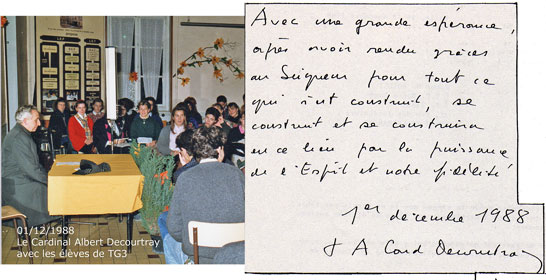
Cardinal Albert Decourtray with the pupils of TG3 in 1988
- 1990, a further 1,100 m² of the Dubure factory are purchased.
Sister Monique Boizet steps down; the first lay head teacher is appointed. Trusteeship passes to the diocese. (569 pupils) - 1991, opening of the first BTS course (two-year higher vocational diploma). (630 pupils)
- 1993, fitting-out of the school restaurant. (674 pupils)
- 1994, renovation of the roofs and façades of the Saint-Charles building. (640 pupils)
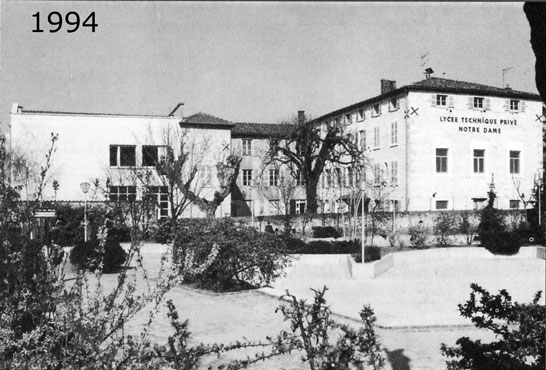
- 1996, creation of the Training Centre. (680 pupils)
- 1997, landscaping of the inner courtyards and renovation of the prefabricated building. (672 pupils)
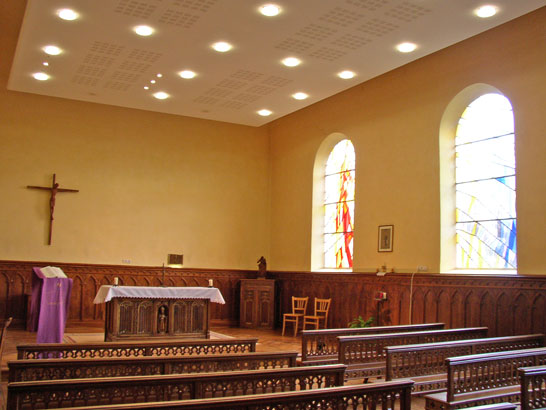
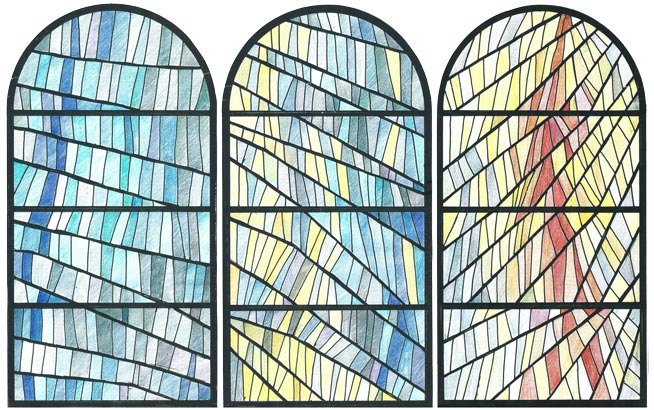
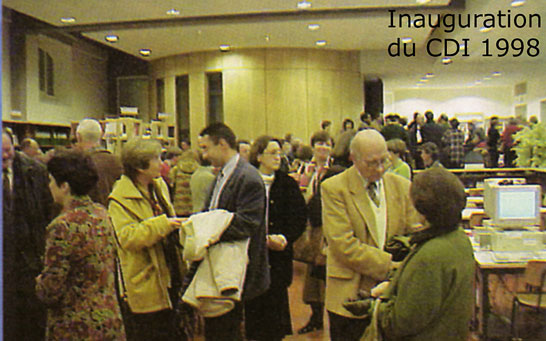
- 1998, a new school library and resource centre (CDI) is created in place of the large garage in the former Dubure factory, and the chapel is renovated with stained-glass windows created by Robert-Louis Carron †.
20th anniversary of the technical high school. (674 pupils)
- 1999, acquisition of a restaurant on rue des Fayettes, adjoining the library, together with three parking spaces in the courtyard of the former Dubure factory. (660 pupils)
- 2004, the Saint-Charles building, until then on free loan, is purchased from the Congregation of the Sisters of Saint-Charles. We now own all the premises we use. (678 pupils)
- 2005, a further extension is planned: the ground floor of the « France Télécom » building on Place des Marais is acquired (450 m²). (711 pupils + 7 at the Training Centre)
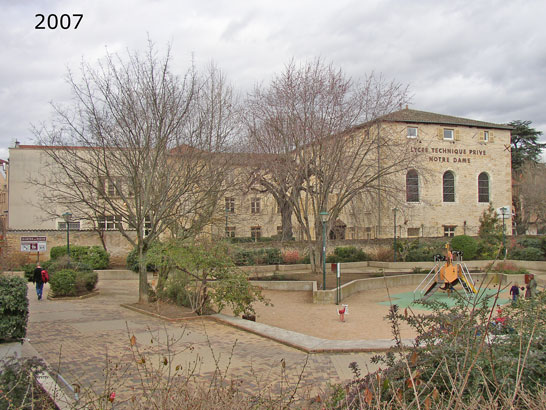
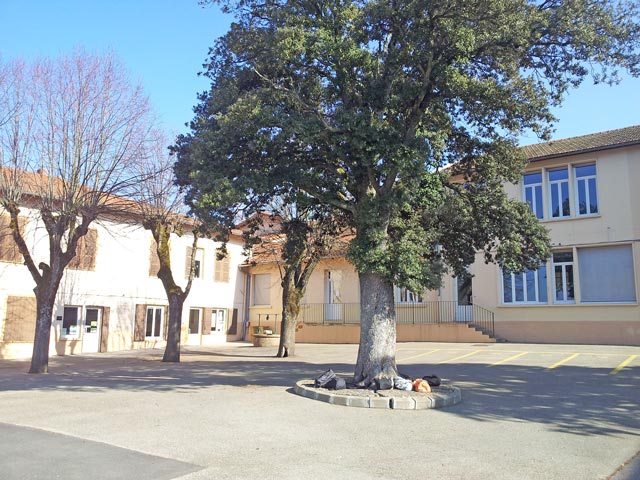
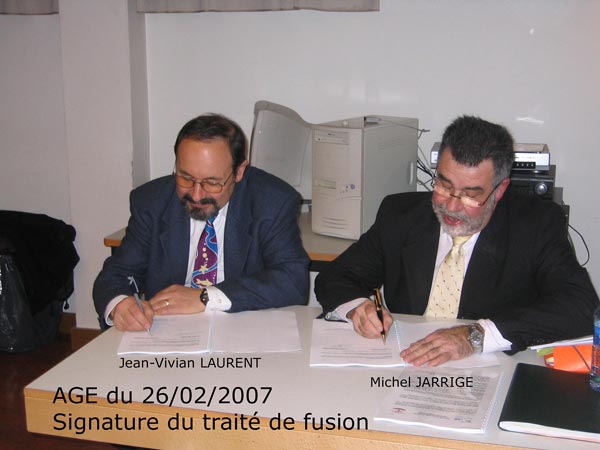
- 2007, the Notre-Dame technological and vocational high school incorporates the Notre-Dame du Mas primary and lower secondary schools, and becomes the Centre Scolaire Notre-Dame. (954 pupils + 25 at the Training Centre)
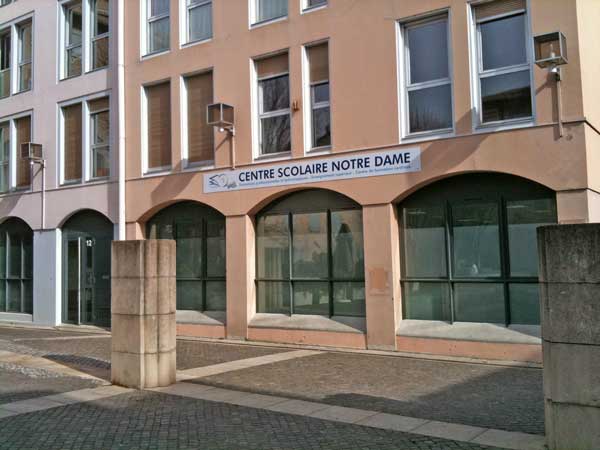
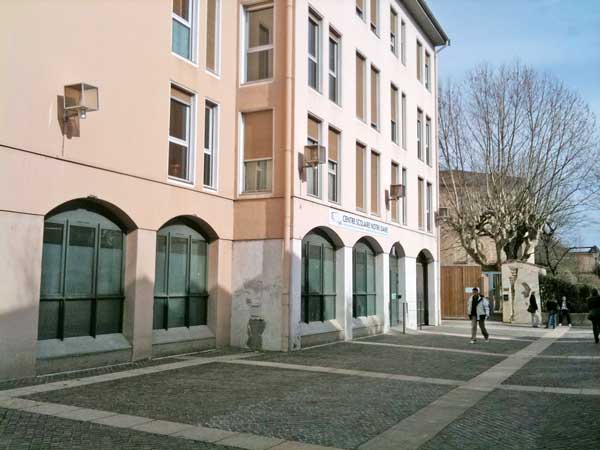
- 2009, first opened for the start of the 2008 school year, the ground-floor premises of the « France Télécom » building on Place des Marais are devastated by a flood in November 2008. After complete refurbishment, they reopen for the 2009 school year for the health and social care programme. Inaugurated and named « Espace Sœur Boizet » on Saturday 6 February 2010. (943 pupils + 33 at the Training Centre)
- 2010, acquisition, on 16 December 2010, of an adjoining property to the east, with a ground footprint of around 440 m² (net floor area ± 1,000 m²). (994 pupils + 46 at the Training Centre)
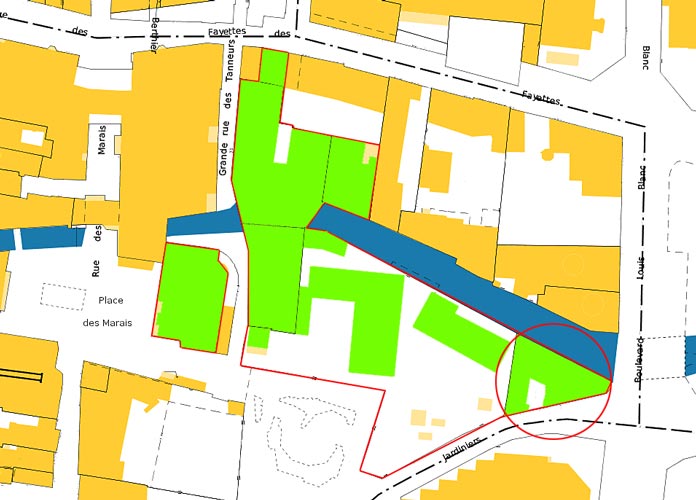
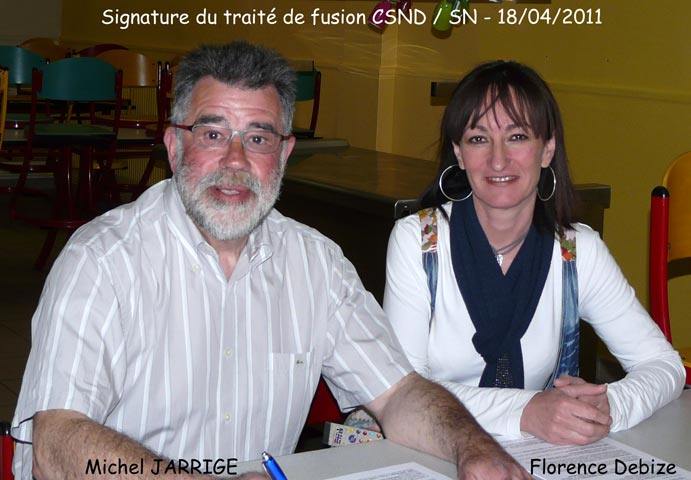
- 2011, the CSND incorporates the Saint-Nicolas primary school of Denicé, in the Rhône, effective 1 September 2011. (1,053 pupils + 48 at the Training Centre)
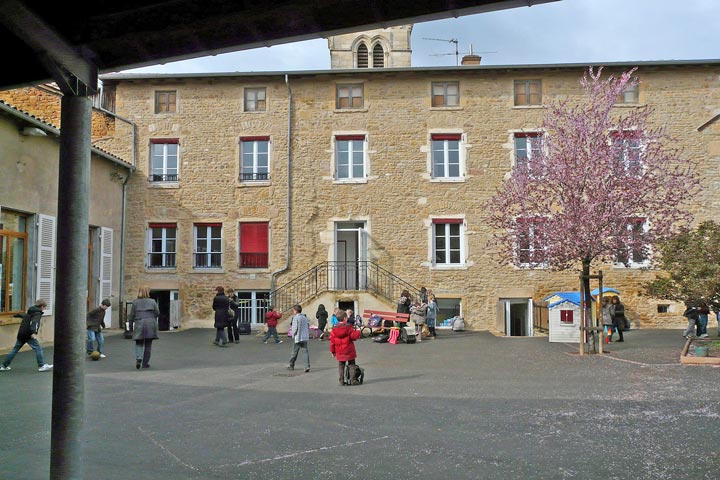
- 2012, refurbishment of the buildings at 14-26 rue des Jardiniers in Villefranche-sur-Saône. The premises are ready to host the Higher Education Hub and the Training Centre for the start of the 2012 academic year. (1,179 pupils + 76 at the Training Centre)
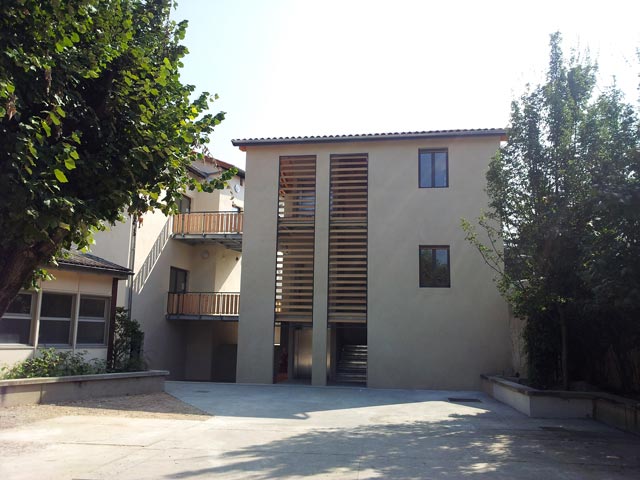
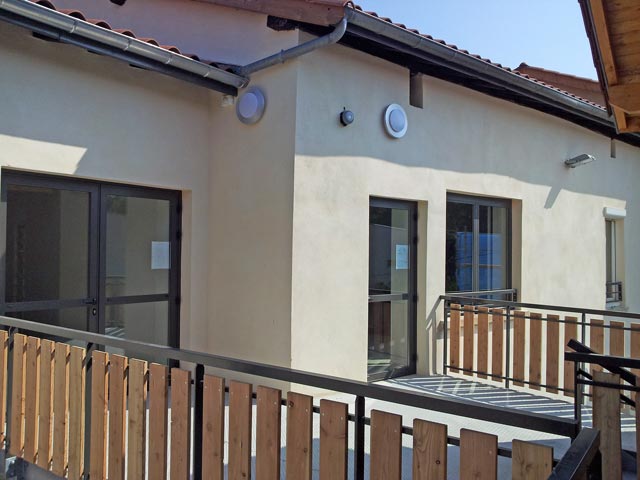
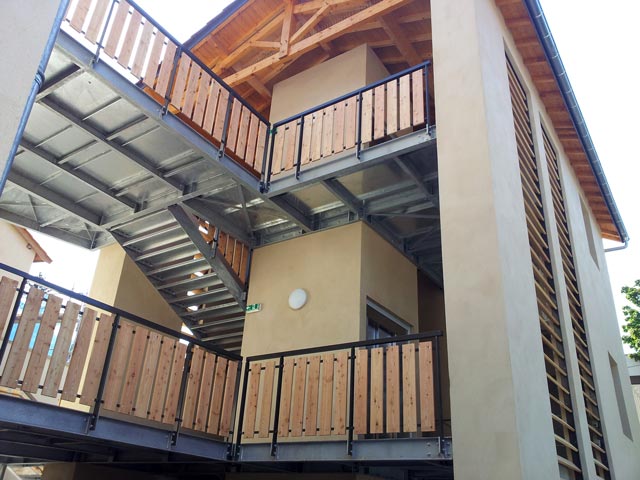
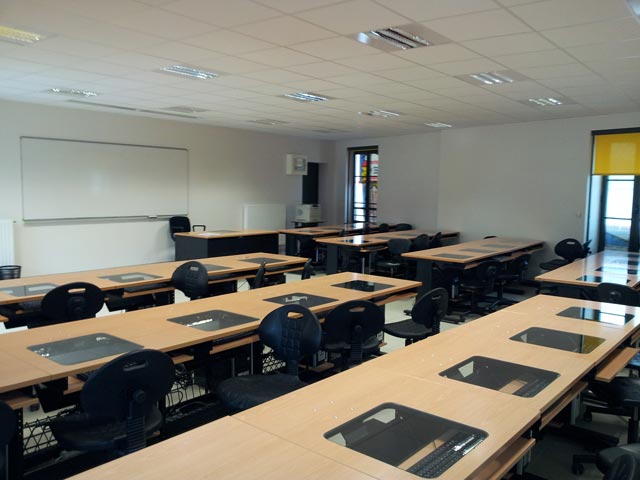
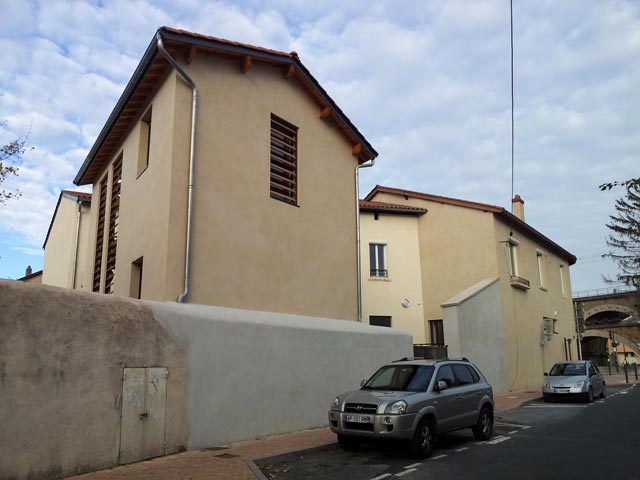
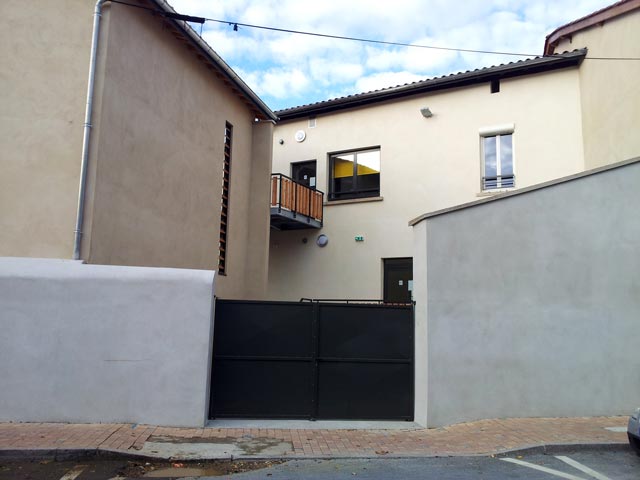
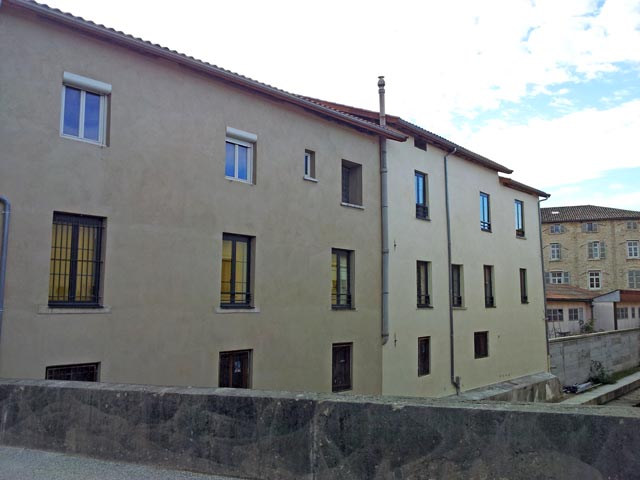
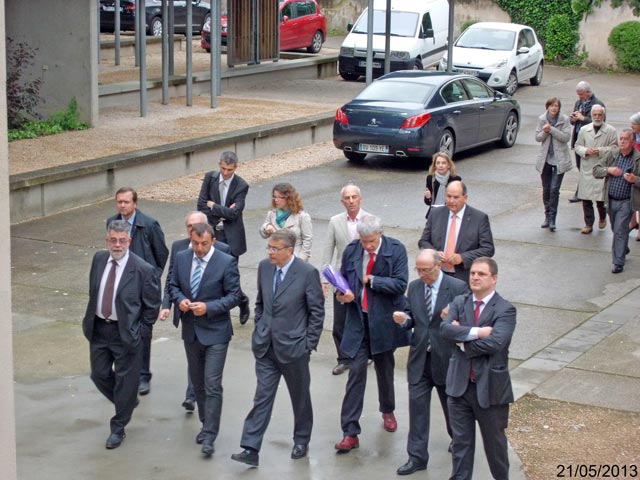
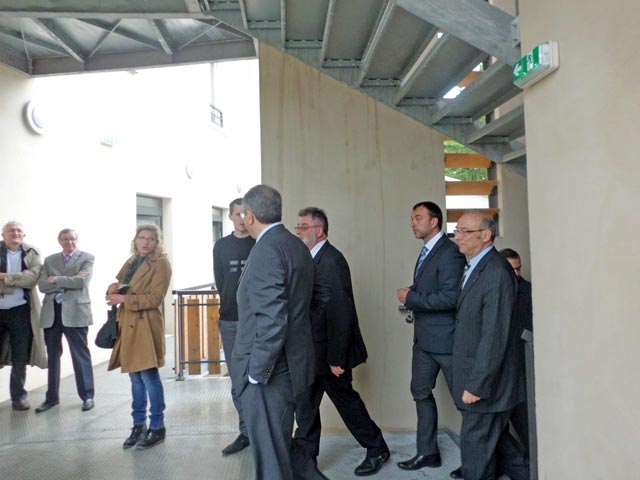
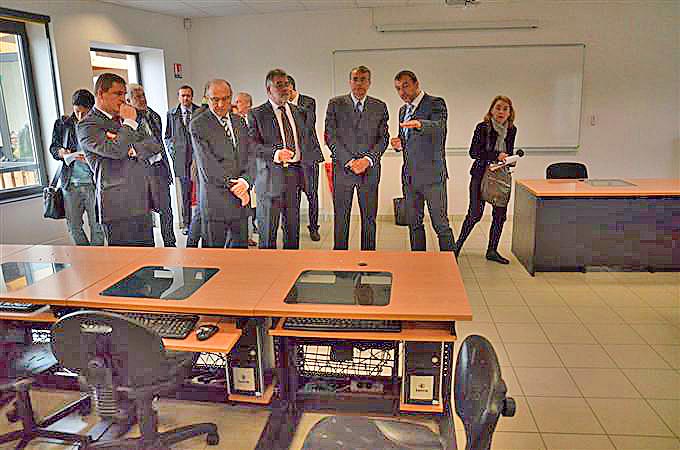
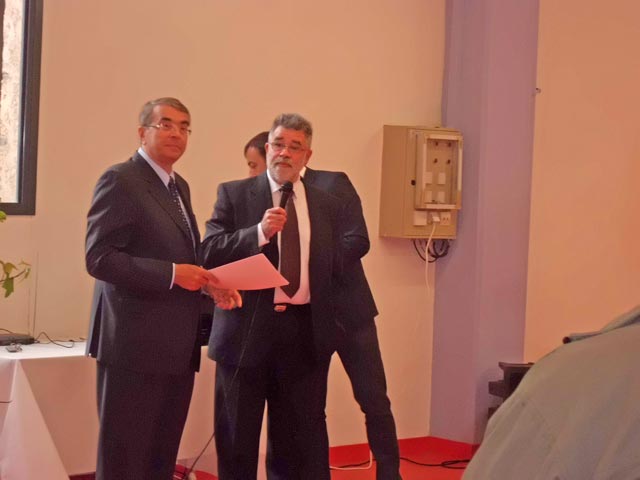
- 2013, the Higher Education Hub and the Training Centre are inaugurated on Tuesday 21 May by Mr Jean-Jack Queyranne, President of the Rhône-Alpes Region. (1,280 pupils + 81 at the Training Centre)
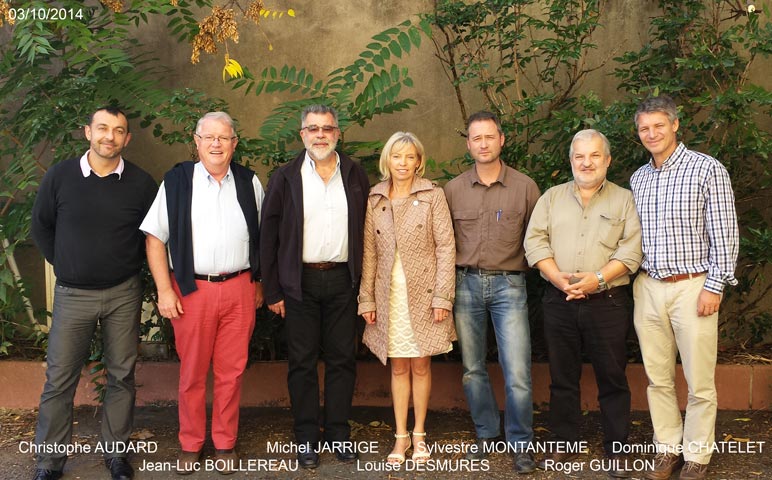
- 2014, acquisition of a 25,169 m² plot in Saint-Jean d’Ardières, as part of Catholic Education’s Horizon 2020 plan to create a lower secondary school in the north-east of the Rhône.
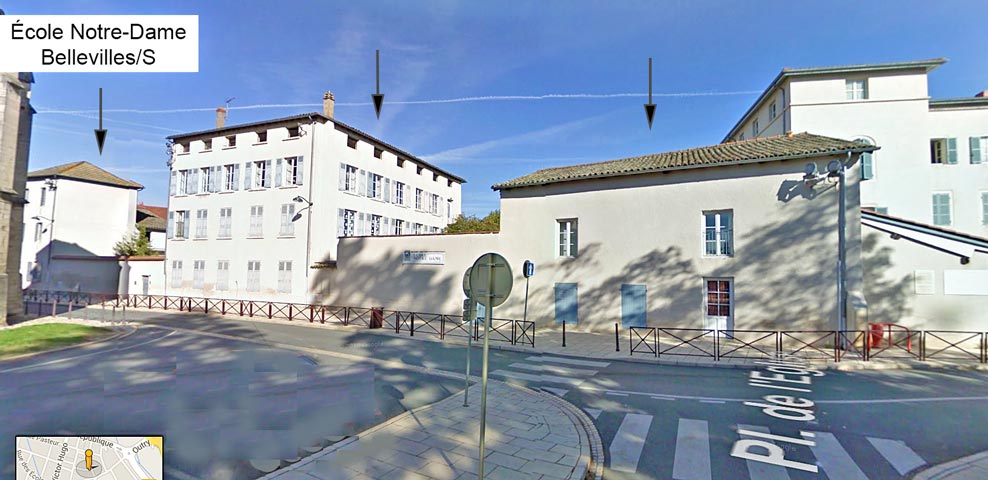
The CSND incorporates the Notre-Dame primary school of Belleville s/S, in the Rhône, effective 1 September 2014. (1,617 pupils/students + 70 at the Training Centre)
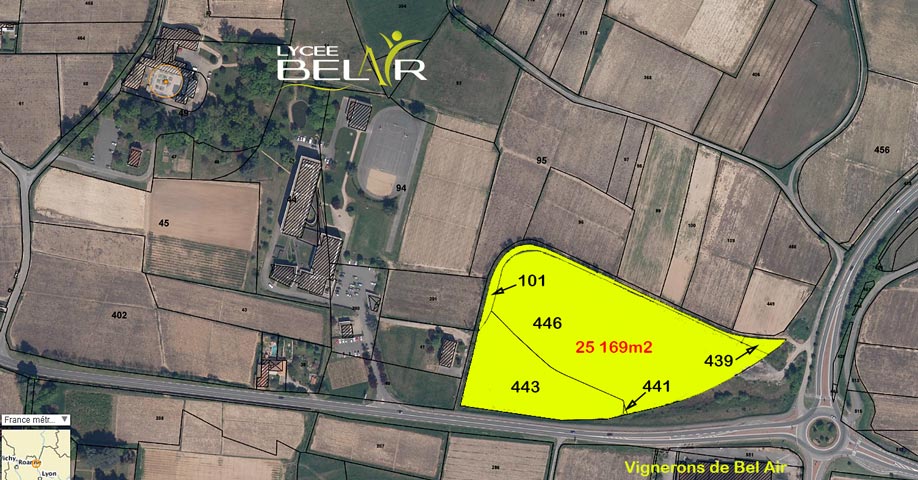
- 2015, launch of the project to build a school complex (primary, lower and upper secondary) on the Bel-Air site in Saint-Jean d’Ardières, under Catholic Education’s Horizon 2020 plan.
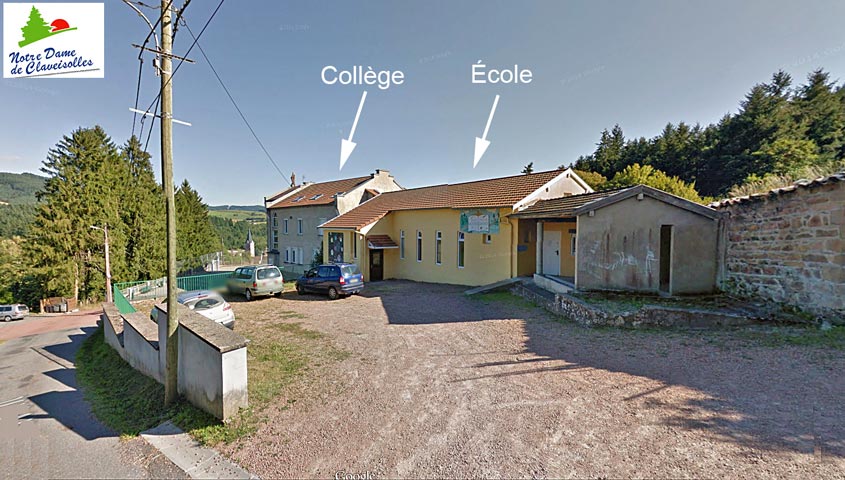
The CSND incorporates the Notre-Dame school group of Claveisolles, in the Rhône (primary and lower secondary), effective 1 September 2015. (1,730 pupils/students + 83 at the Training Centre)
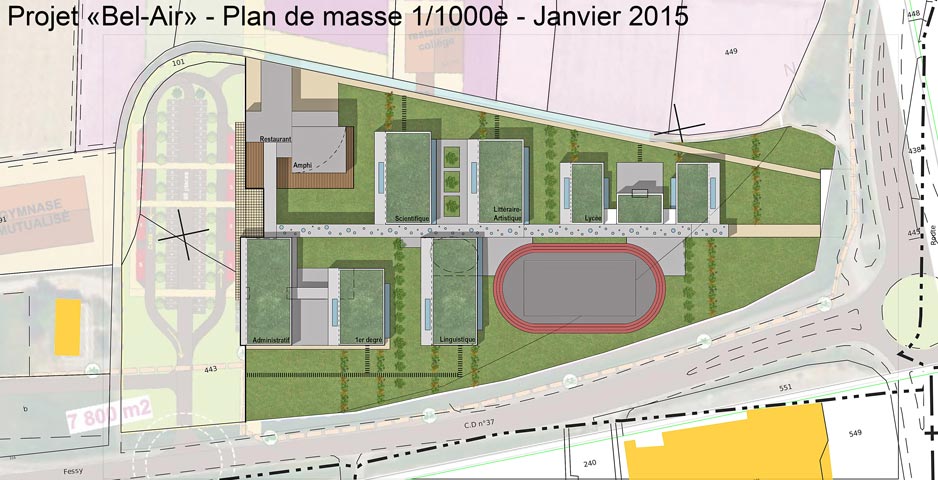
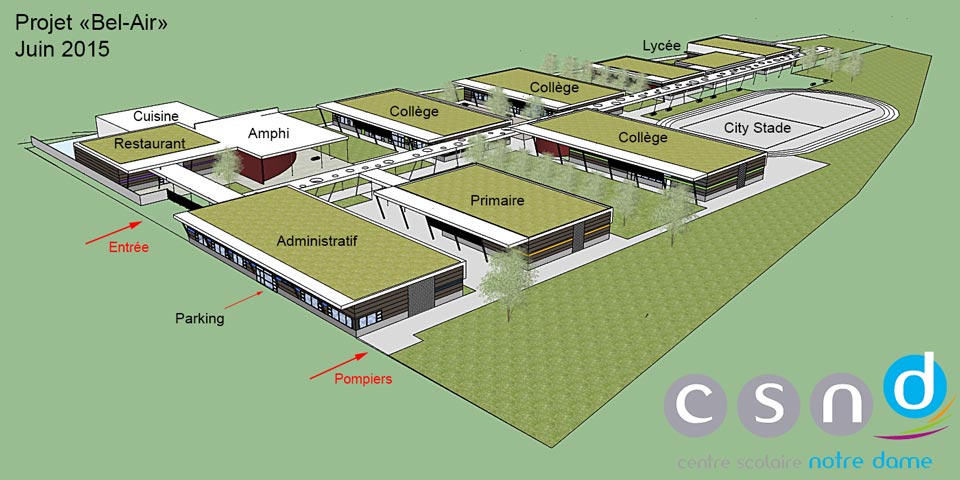
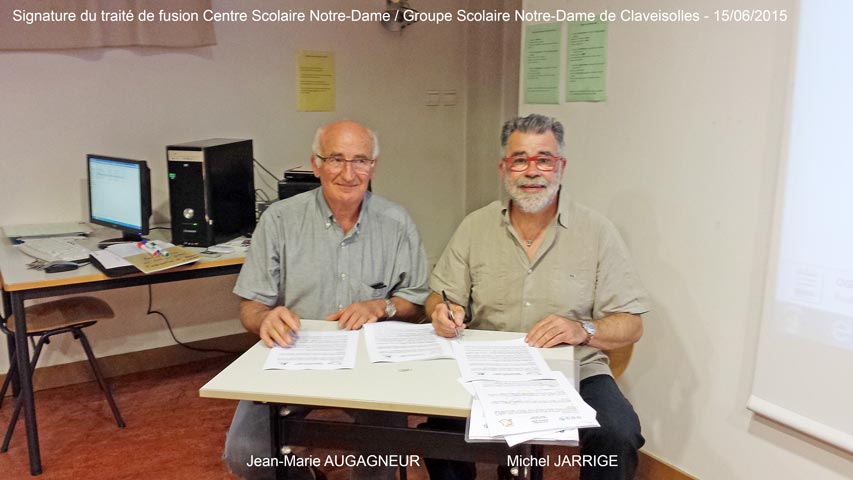
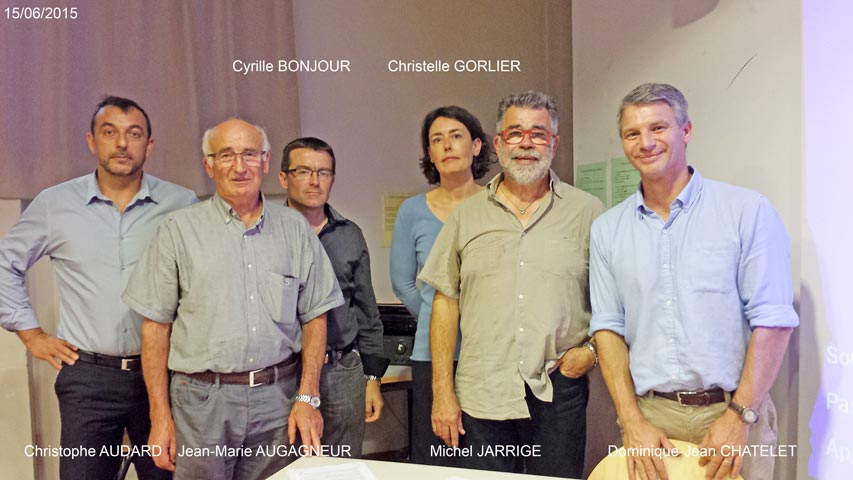
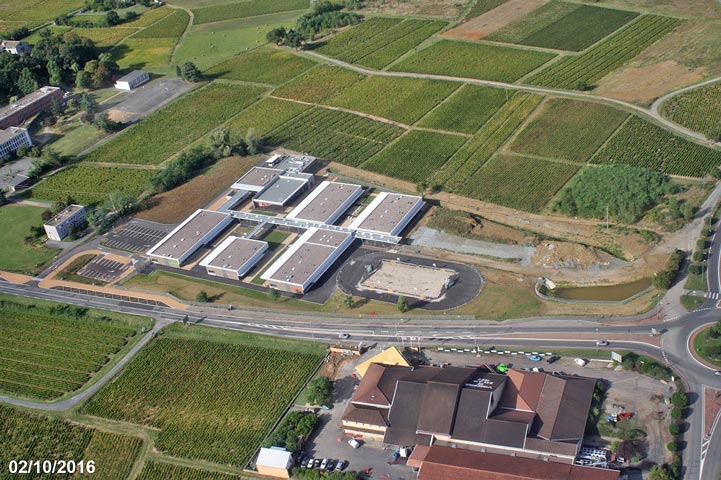
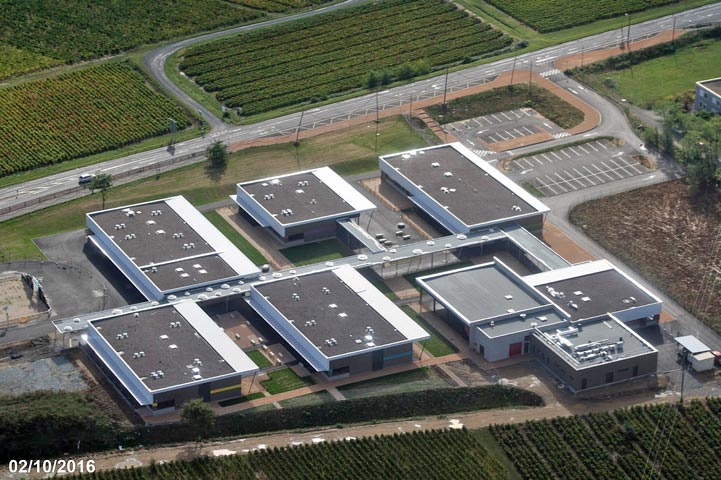
- 2016, phase 1 of the construction of the school complex (primary and lower secondary) at Saint-Jean d’Ardières goes ahead under Catholic Education’s Horizon 2020 plan.
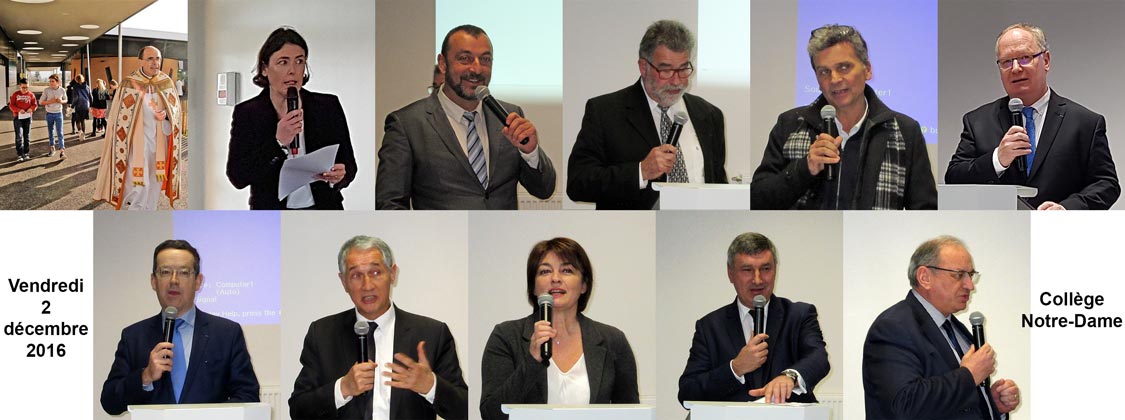
The new Notre-Dame lower secondary school opens on schedule on 1 September 2016. The arrival of the Years 5-6 and special-needs (ULIS) pupils is postponed to September 2017 for administrative reasons.
The inauguration took place on Friday 2 December 2016. (1,851 pupils/students + 87 at the Training Centre)
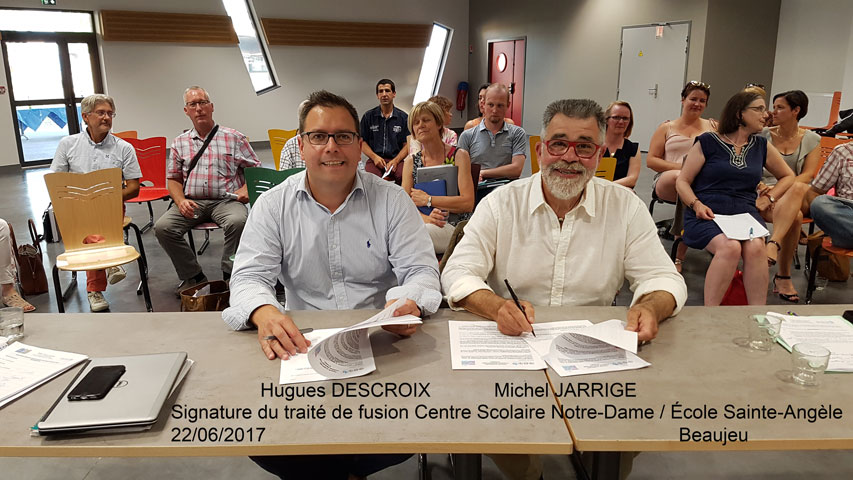
- 2017, the CSND incorporates the Sainte-Angèle school of Beaujeu, in the Rhône, effective 1 September 2017. (2,137 pupils/students + 55 at the Business School)
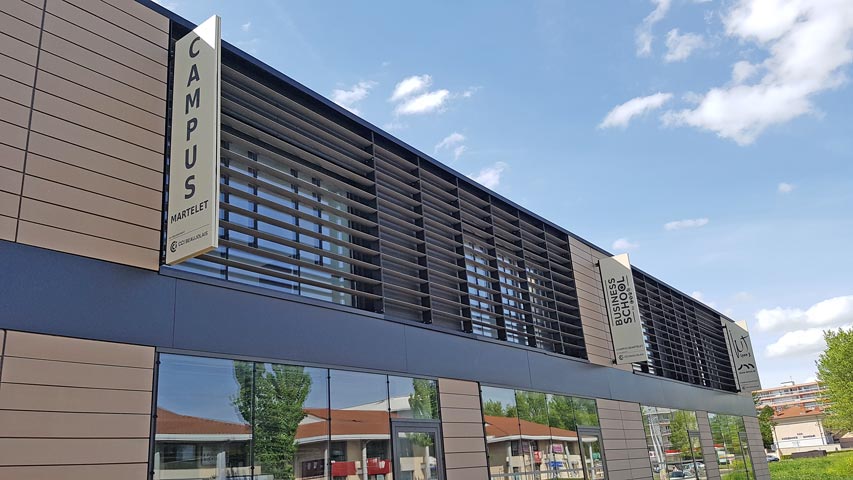
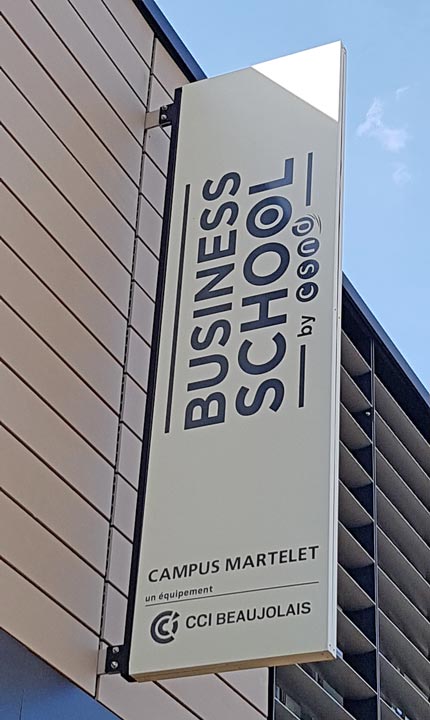
- 2017, the programmes of the Higher Education Hub and the Training Centre begin their transfer to the Business School by CSND, on the Martelet Campus. In time, nine classrooms will be freed up at 72 rue des Jardiniers in Villefranche s/S.
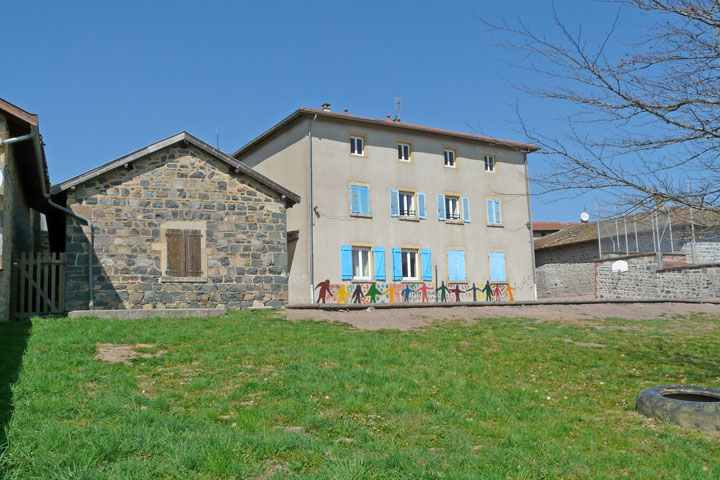
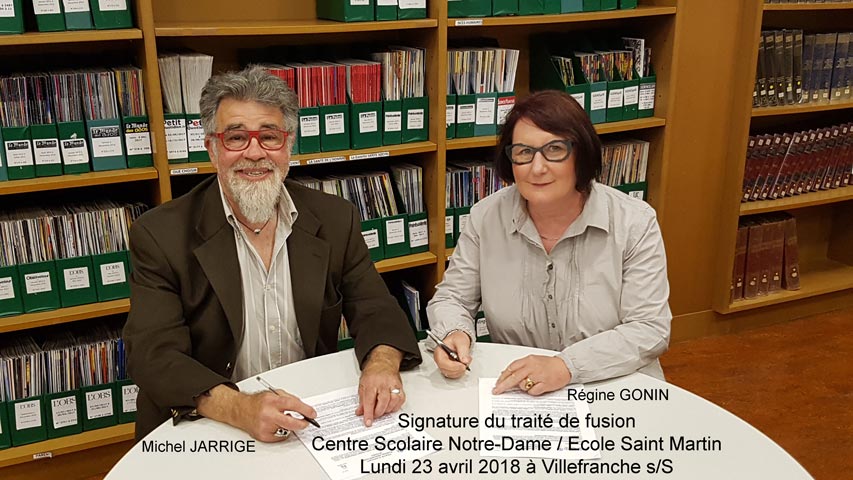
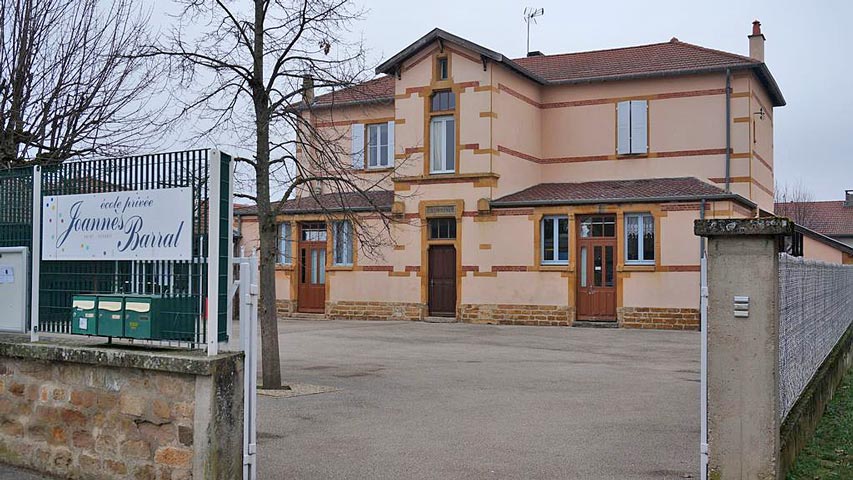
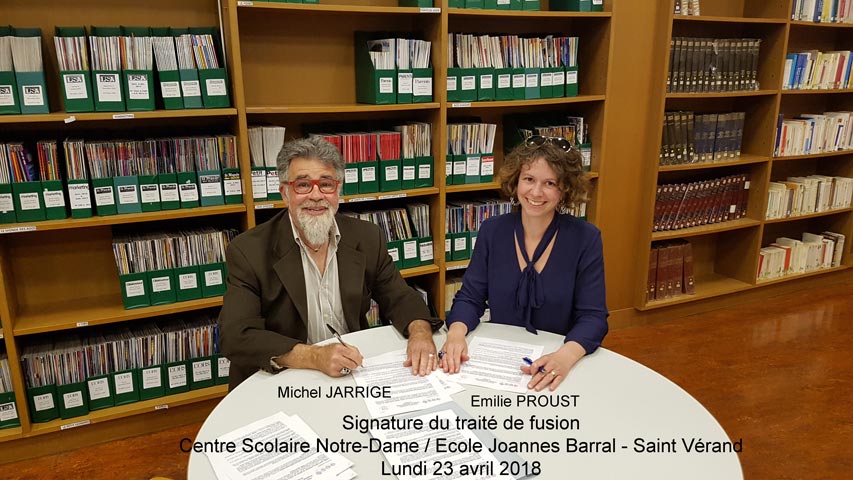
- 2018, the CSND incorporates the Saint-Martin school of Poule-les-Écharmeaux and the Joannes Barral school of Saint-Vérand, in the Rhône, effective 1 September 2018.
- 2019, since its creation in 1973, the ARFA (Regional Association for Work-Study Training), initially administered by the Rhône Chamber of Trades and the Beaujolais Chamber of Commerce and Industry, has run its Apprentice Training Centre (CFA). OGEC N-D joins its governance as third administrator and takes over its administrative, accounting and financial management; the CFA becomes the « CFA du Beaujolais » (CFAB). Today, the CFA du Beaujolais and the Business School du Beaujolais (BSB) work hand in hand to serve the students of the area. (2,445 pupils/students)
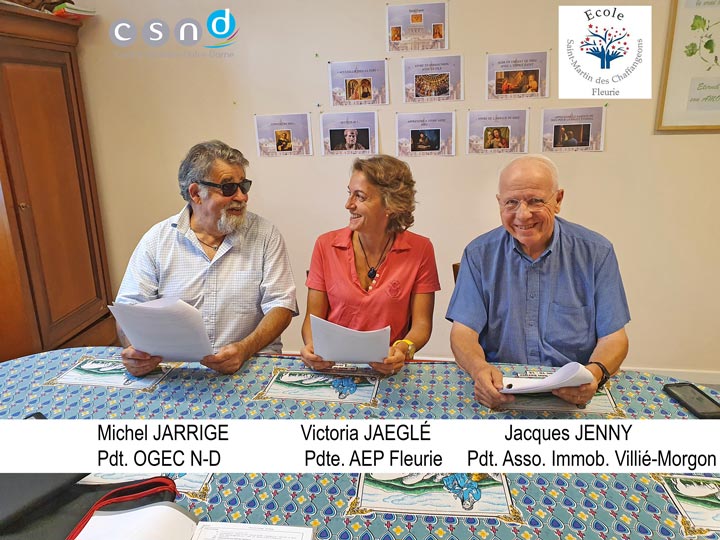
- 2020, the CSND incorporates the Saint-Martin des Chaffangeons school in Fleurie, effective 1 September 2020.
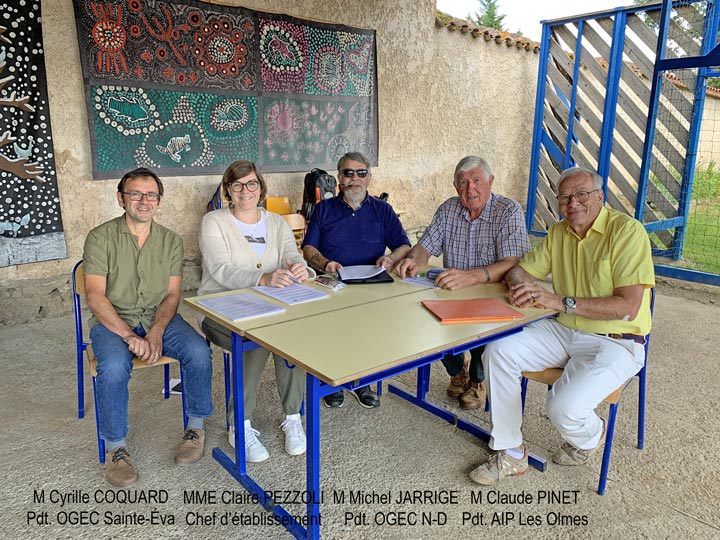
- 2021, the CSND incorporates the Sainte-Éva school in Les Olmes, Vindry-sur-Turdine, effective 1 September 2021. (3,970 pupils/students)
- 2021, OGEC Notre-Dame owns, with a few exceptions, all the property housing its schools. In 2021 it reorganises by creating the Société Foncière Beaujolais Val-de-Saône (SFBVS), a cooperative company of collective interest in simplified joint-stock form, part of the social and solidarity economy. Wholly owned by OGEC Notre-Dame and its partners, this subsidiary is intended to hold full ownership of the property portfolio, which it manages.

- 2021, OGEC Notre-Dame acquires the company « Chessy Restauration » to provide all catering services for the school community (pupils, teachers, staff, etc.).

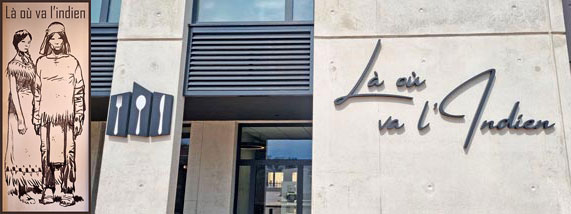
- 2022, Chessy Restauration creates a wholly-owned subsidiary, « Chessy Traiteur », to meet the event-catering needs of several entities. Chessy Restauration later becomes « Les Cantines Beaujolaises » and Chessy Traiteur « Les Saveurs Beaujolaises ». A restaurant, « Là où va l’Indien », also opens on the Beaujolais Campus, next to the « L’Amphi » conference hall. OGEC Notre-Dame now covers all its catering needs independently. (4,107 pupils/students)
- 2024, OGEC Notre-Dame has created FormAlliance, an employers’ group set up as a collective-interest cooperative (SCIC, a simplified joint-stock cooperative under France’s social and solidarity economy framework). Its purpose is to pool the skills and expertise needed to manage OGEC Notre-Dame’s own organisations and those of its partners.

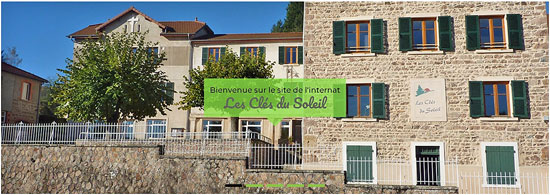
- 2025, OGEC Notre-Dame incorporates the « Les Clés du Soleil » boarding house in Claveisolles. It welcomes boarders from the Notre-Dame primary and lower secondary schools, as well as educational stays for other schools, offering pupils an immersive and enriching experience combining learning, discovery, community life and openness to the world.
- 2026, OGEC Notre-Dame took over the governance and management of the MFR du Campus du Beaujolais, a rural family training centre (Maison Familiale Rurale d’Éducation et d’Orientation). The apprenticeship centre (CFA) born from this takeover focuses on developing training programmes backed by the French Ministry of Labour, professional branches and skills operators (OPCOs), and manages the apprenticeship contracts of its partner training units (UFAs). This new organisation is called « Métiers Campus Formation » (MCF).